
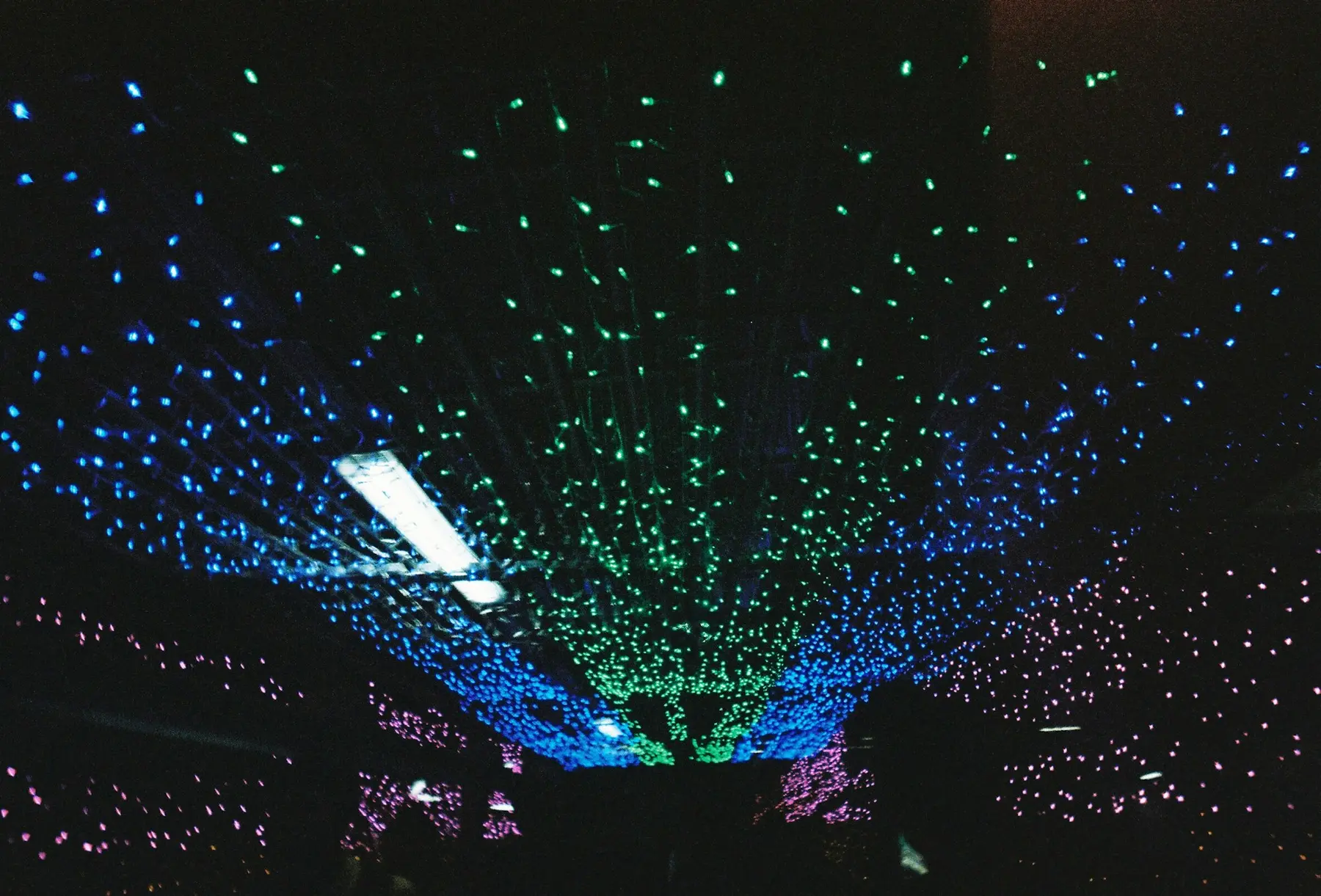
Starry-Sky and Fibre-Optic Ceilings
Starry-sky and fibre-optic ceilings for a night sky indoors
Tiny points of light across a dark ceiling create a surprisingly deep sense of space. A starry-sky ceiling uses fibre-optic strands to place stars where you want them, with a calm, almost endless effect.
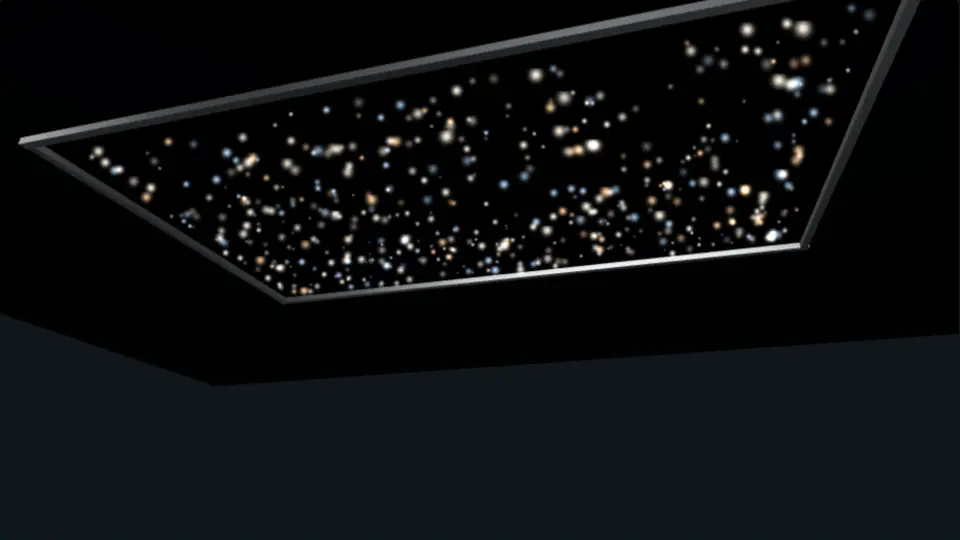 3D visualisation, not a project photo
What you are seeing
Fibre-optic stars
Points of light of different sizes and colours twinkle independently across a dark membrane.
Starry-Sky and Fibre-Optic Ceilings: source product names, figures and units are on the specification pages.
What is it?
A starry-sky ceiling uses a light source and a bundle of fine fibre-optic strands. Each strand ends in a small point of light, and the strands are placed in or behind the ceiling membrane.
How it works
- A light engine is installed and linked to the fibres.
- The fibres are laid out according to the design, such as a random scatter, a constellation or a pattern.
- Each fibre carries light to its end point, showing as a tiny star on the ceiling, which can twinkle or change colour with suitable control.
Key design characteristics
- Pin-point light with no heat at the ceiling surface from the fibre itself
- Layouts range from random scatter to specific constellations
- Optional twinkle and colour effects
- Often combined with a translucent or lacquer ceiling for an extra layer
Benefits
- A calming, immersive ambience
- The light engine can be positioned away from the ceiling itself
- Works well in low-light rooms
Practical considerations
- The number of stars, brightness and effects depend on the light engine chosen.
- Star effects are most striking in rooms that can be dimmed.
- Light engine access and ventilation are planned during design.
Suitable spaces
- Home theatres
- Bedrooms and nurseries
- Pooja and meditation rooms
- Lounges and bars
- Spas
- Cinemas and entertainment venues
See more on the Spaces We Transform page.
Design possibilities
- Random star scatter
- Constellation layouts
- Milky-way style clusters
- Colour-changing twinkle effects
Lighting integration
The fibre-optic light engine is the light source. Colour and twinkle options depend on the engine selected.
Architectural lighting optionsInstallation and maintenance
- A site visit and measurement come first, so the perimeter profile, any bulkheads and every light position can be planned before fabrication.
- The membrane is made to the measured room and tensioned into the profile on site, usually after wet trades and painting are complete.
- Because the ceiling sits below the structural slab, the available void depends on the room. Ask for a void check if you plan to add lighting behind the membrane.
- Dust the surface gently with a soft, dry microfibre cloth. Avoid abrasive pads and solvent cleaners.
- Keep sharp tools and hot work away from the membrane. Ask us about repairs rather than attempting one yourself.
Design possibilities
Inspiration for starry-sky and fibre-optic ceilings
Details we confirm with you
These details depend on the exact products selected. We confirm them in writing for your project rather than quoting figures in general:
- Light engine options, power and life
- Maximum fibre length and density per engine
Related ceiling types
Start a project
Interested in starry-sky and fibre-optic ceilings?
Share your room details and we will advise on design, lighting and a site visit in Chennai.